Designing With Context: How Cultural Storytelling Elevates Luxury Hotel Interiors
Introduction
Luxury used to mean a certain look. Marble floors. Crystal chandeliers. A predictable palette of cream and gold.
That formula still exists. But it no longer impresses.
Today's hotel guests are more well-travelled, more culturally aware, and more discerning than any previous generation. They have stayed in beautiful hotels on every continent. They recognize when a lobby could belong anywhere, and when a space could only belong here.
The most memorable luxury hotel interiors being created right now are not the most polished. They are the most rooted.
This is the shift that defines culturally inspired luxury hotel design: the move from decorative opulence to authentic storytelling. And for designers who understand this, it changes everything.
Why Generic Luxury No Longer Impresses
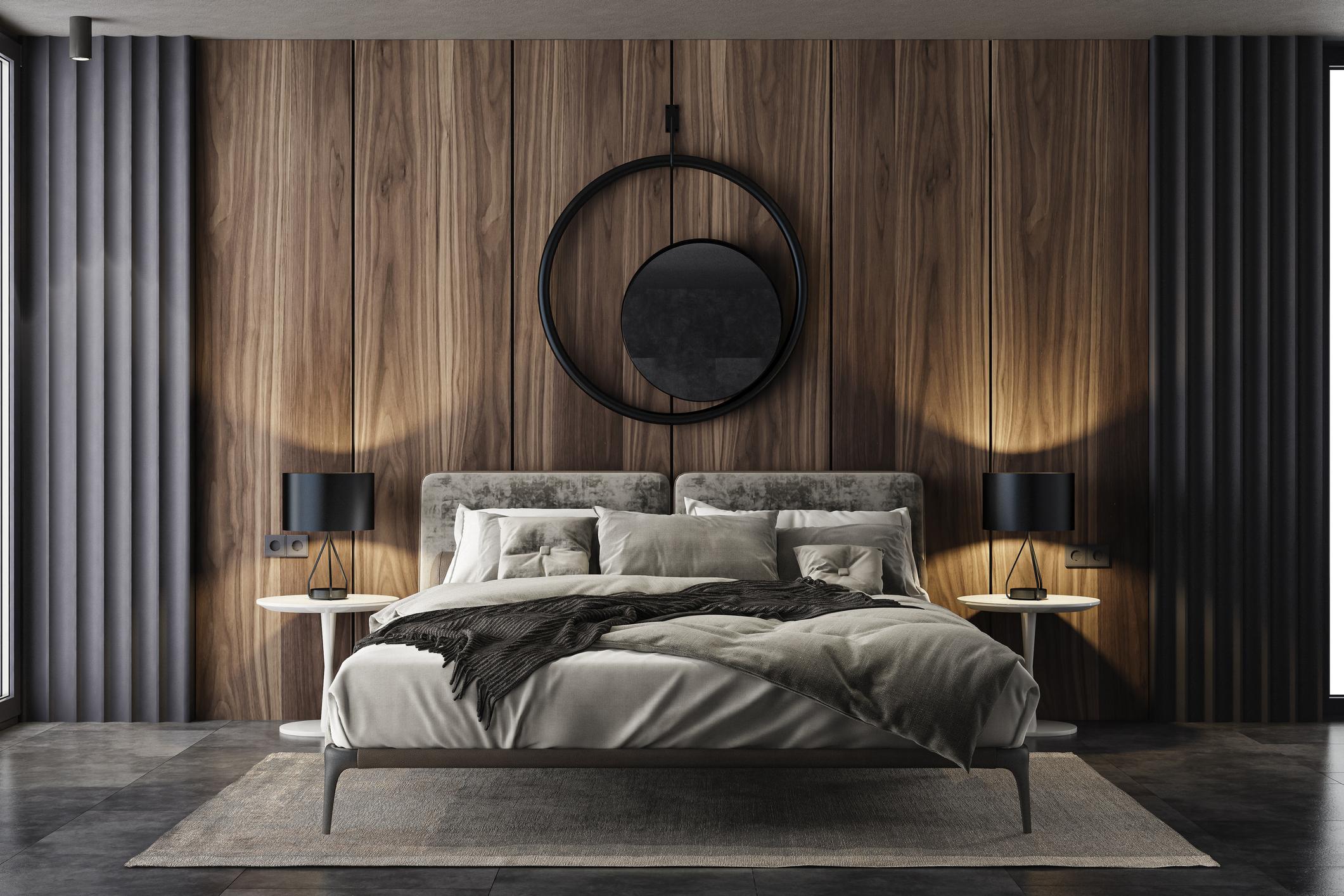
For decades, international luxury hotels operated on a simple principle: replicate the standard. Clean lines, neutral palettes, high-end finishes. The result was consistency, but also sameness.
A five-star hotel in Dubai began to look like a five-star hotel in Singapore. The materials were premium, but the story was absent.
Guests noticed.
In a world where travelers share experiences in real time and choose destinations based on the unique, generic luxury has stopped being a differentiator. It has become a baseline. Meeting it gets you in the room. It does not make you the destination.
What creates lasting impressions is a sense of place. The feeling that this space was designed for here, not transplanted from a global template.
"The most extraordinary spaces are not the ones that impress on entry. They are the ones that stay with you long after you leave."
What Culturally Rooted Design Actually Means
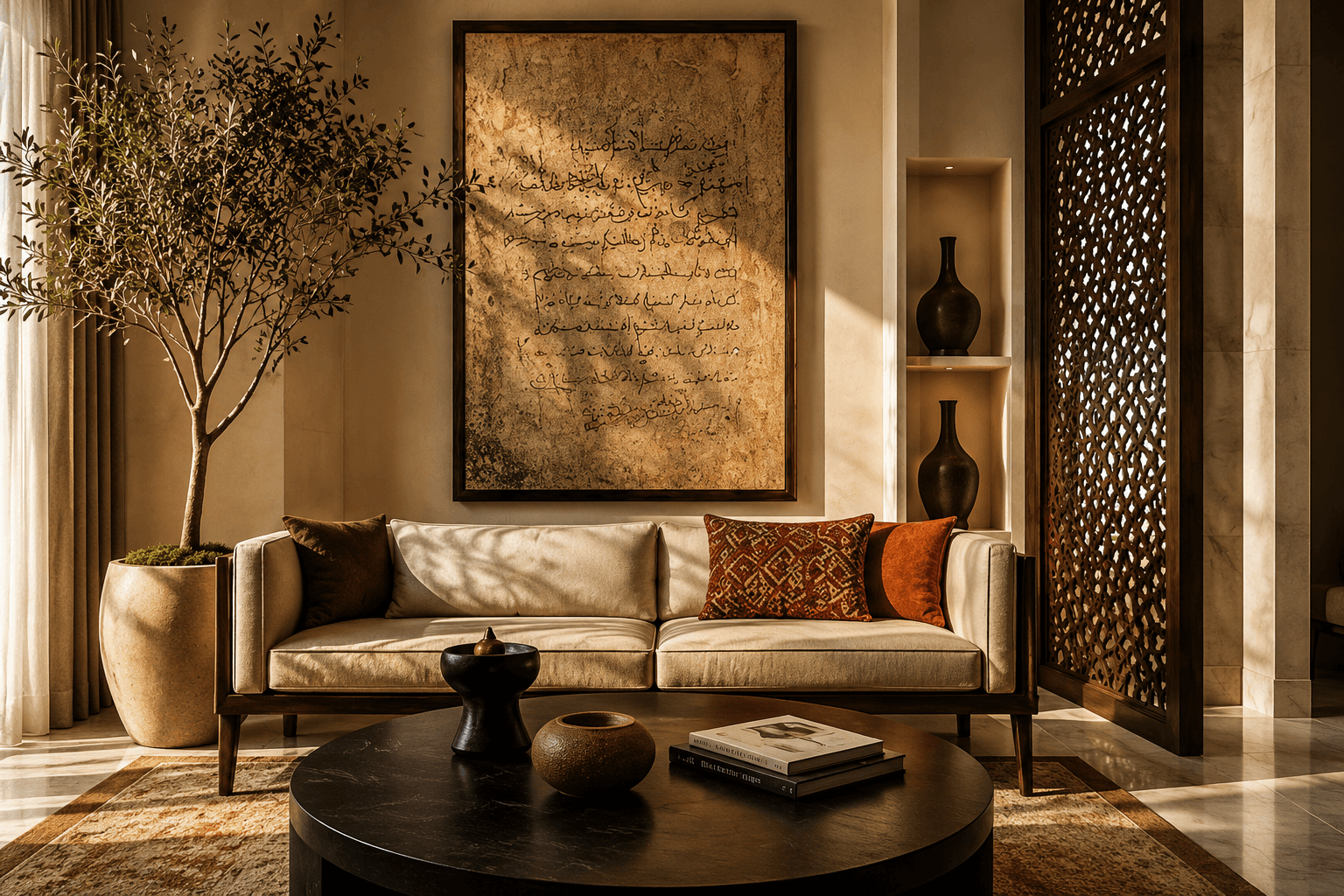
Culturally inspired design is not about decorating with local motifs or placing a traditional artefact in a corner of the lobby.
It is about designing from the inside out.
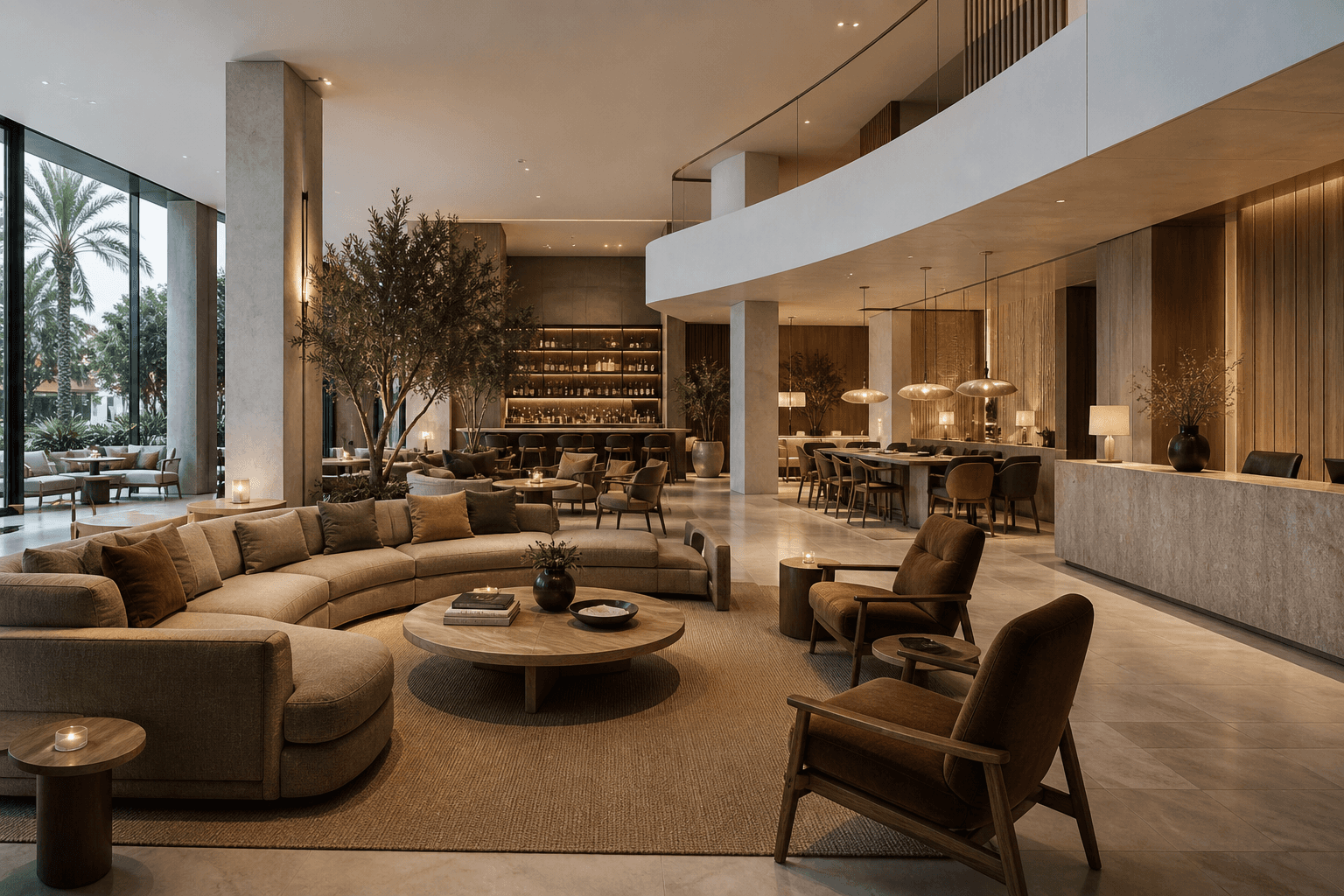
It begins with research: the history of a place, the materials it is known for, the crafts its communities have practiced across generations, the way light falls at a particular time of year, the colours that define a regional landscape. From this foundation, a design language is built, not borrowed.
The result is a space that feels intentional. Where every decision, from the pattern on a wall panel to the grain of the timber used at the front desk, carries meaning.
This is the difference between a hotel that looks beautiful and a hotel that tells a story.
How Local Materials, Art, and Craft Translate into Interior Language
Every region has a material vocabulary. Stone varieties unique to a geography. Weaving traditions passed down through centuries. Ceramic and metalwork techniques that carry cultural identity in their very method of production.
When these are brought into a hospitality interior thoughtfully, they do more than add visual interest. They carry memory. They connect a guest to the place they have travelled to experience.
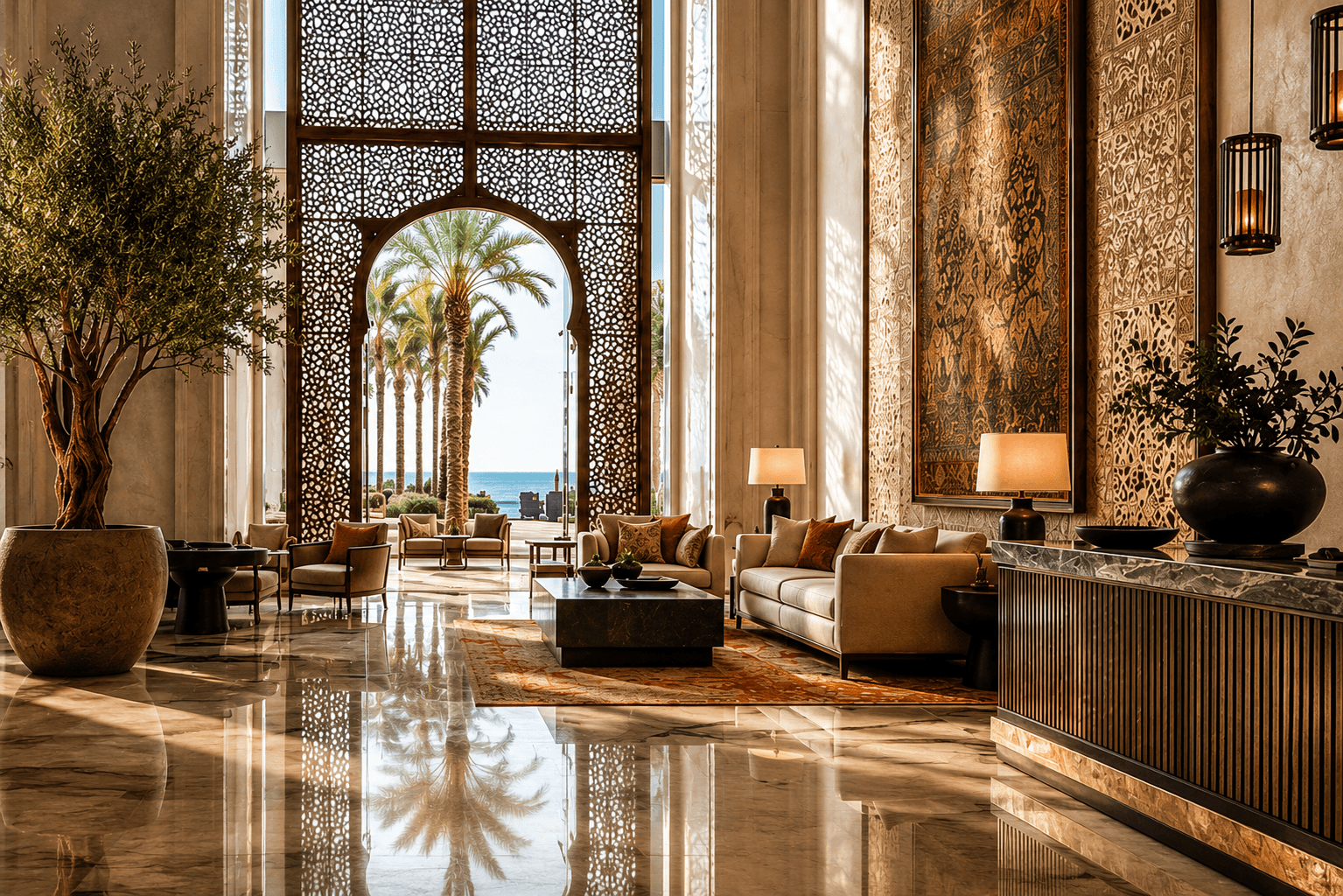
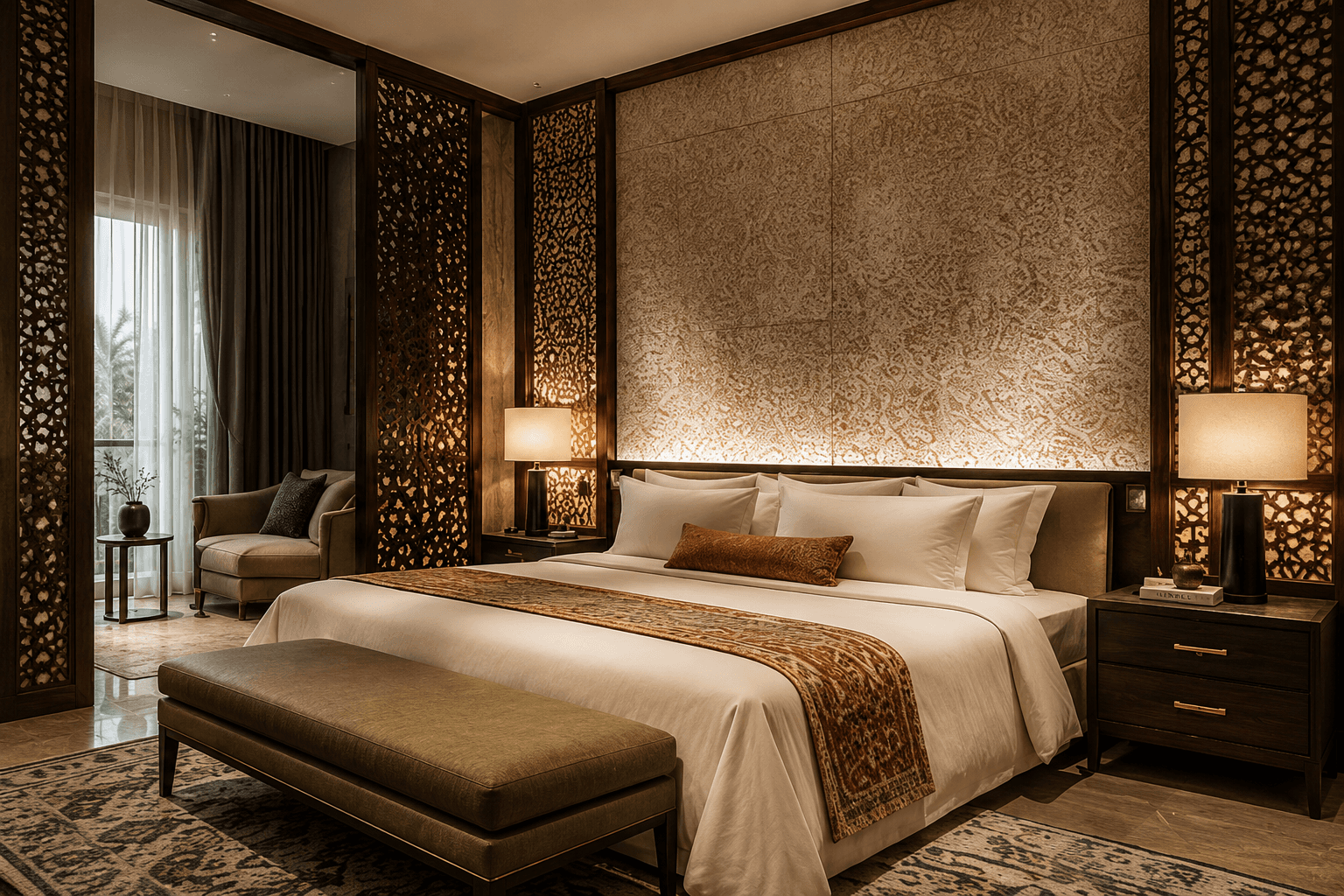
In the Middle East, this might mean working with local craftsmen to produce hand-carved plasterwork inspired by traditional Islamic geometry. In South Asia, it could mean commissioning hand-block-printed textiles that reference regional dyeing traditions. In East Africa, it might involve integrating locally sourced stone and reclaimed wood in ways that honor the material's origin.
None of this requires sacrificing comfort or refinement. The goal is not to create a museum. It is to create a living space that feels alive with context.
Balancing Cultural Authenticity with International Luxury Standards
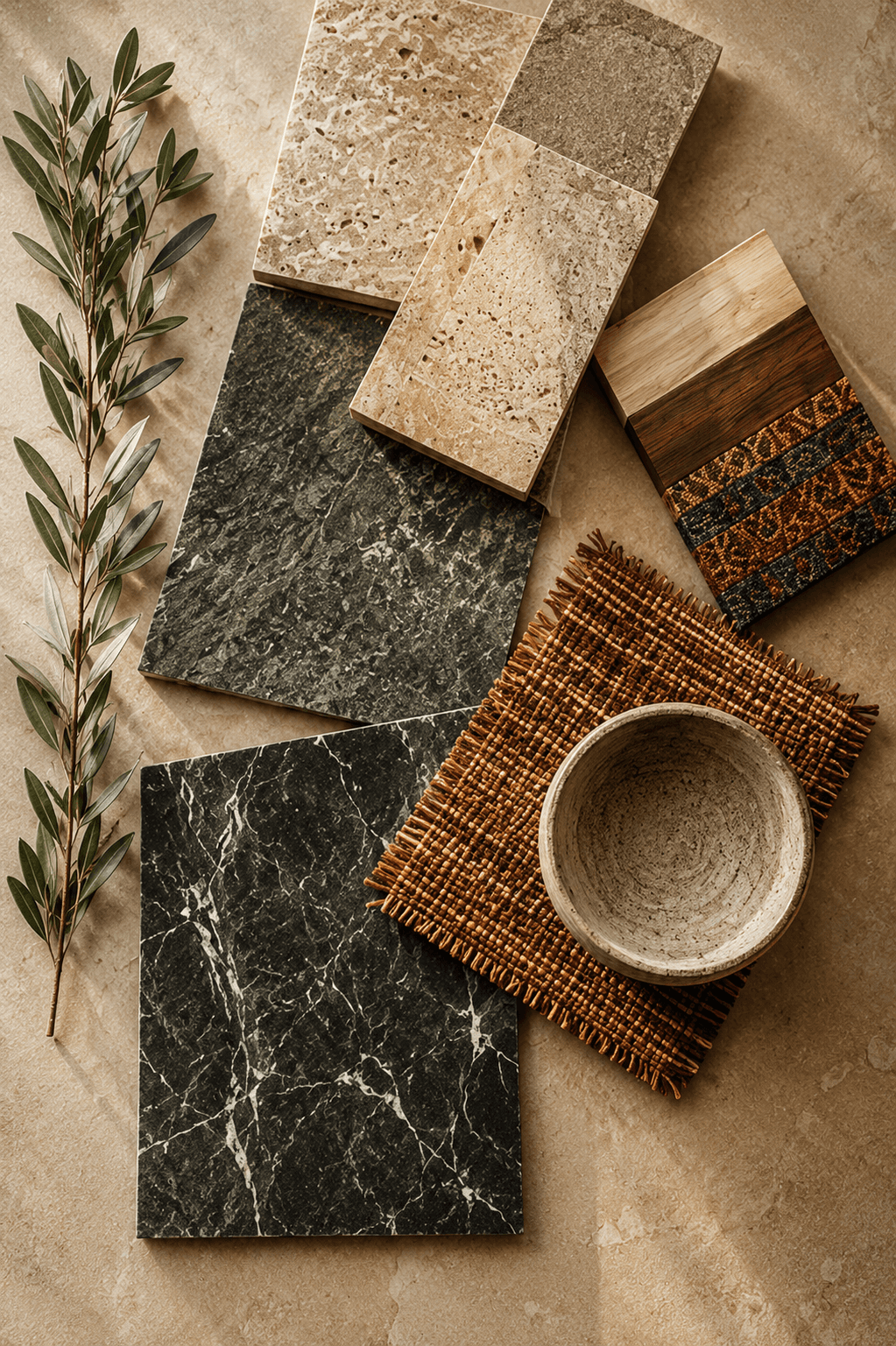
There is a question that comes up often in culturally inspired hotel design: how do you honor local identity without compromising the expectations of an international luxury guest?
The answer is that these two things are rarely in conflict.
Cultural storytelling does not mean austere simplicity. A handwoven textile can be used to upholster a piece of furniture that is impeccably comfortable. Locally sourced stone can be finished to a standard that rivals any imported marble. Artisan-crafted lighting can sit alongside the best international hardware and improve the room.
The discipline lies in editing. Not everything local belongs in the space, just as not everything luxurious belongs in the space. The designer's role is to curate with rigor: selecting the elements that speak clearly to place and executing them at the highest possible standard.
When this balance is achieved, the space does not feel like a compromise between authenticity and luxury. It feels like both, fully.
How IDA Approaches Regional Identity in Hotel Projects
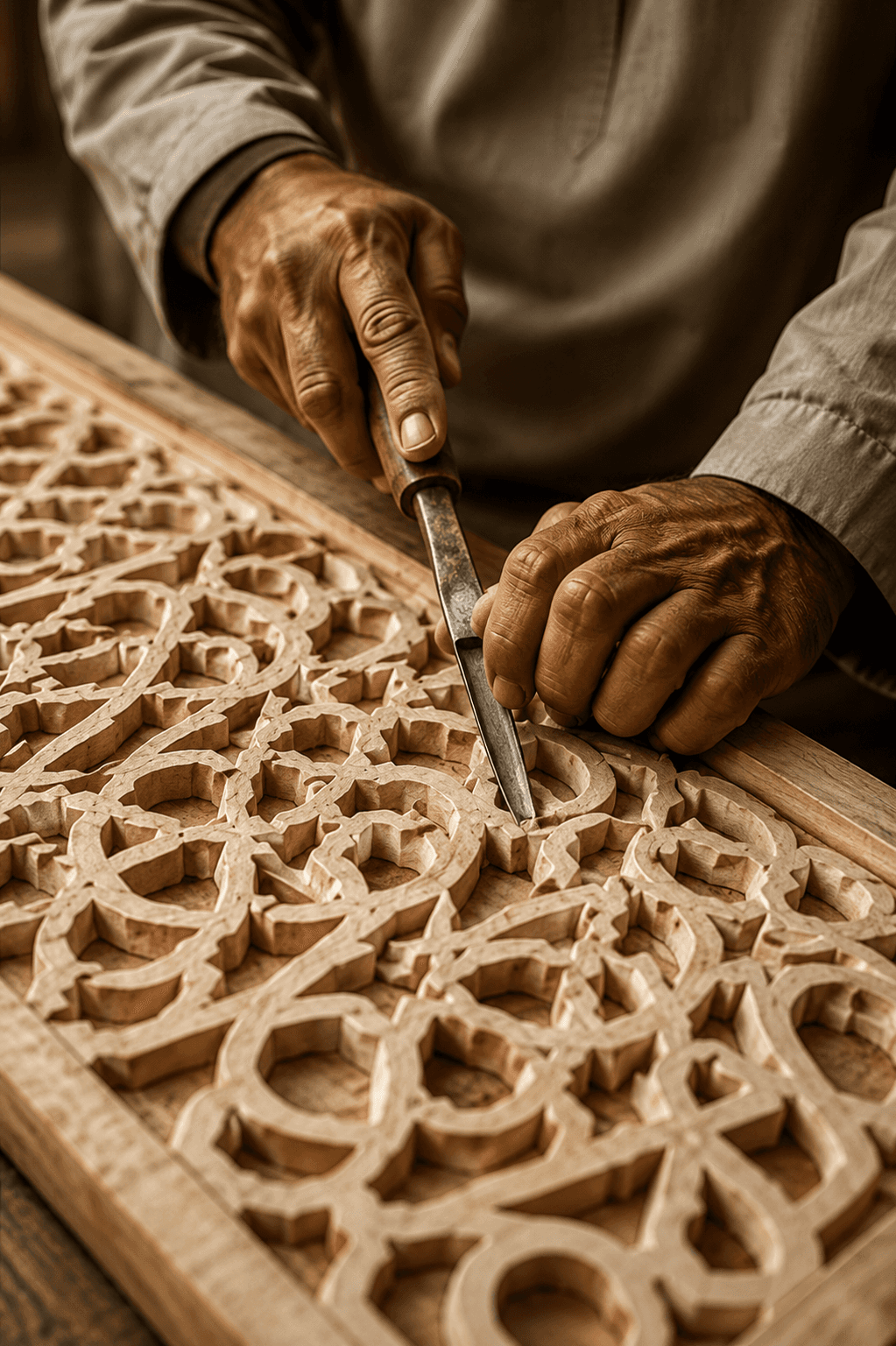
At IDA, cultural context is not an add-on. It is where the design process begins.
Across our work in the Middle East, India, Africa, and Asia, we approach each project by first understanding the place: its architecture, its craft traditions, its relationship between indoor and outdoor space, the way its climate shapes how people live and gather.
This informs every layer of the design. The spatial planning. The material selection. The furniture, the lighting, the art. The result is a hospitality interior that could not have been designed for anywhere else.
Our project at the Ajman Hotel and Villas is one example of this philosophy in action: a property that draws from the heritage and coastal character of its location to create an environment that feels distinctly of the Emirates, while meeting every standard expected of luxury hospitality.
This approach is not just a creative preference. It is what we believe exceptional hotel design demands.
The Business Case: Why Cultural Design Drives Guest Loyalty
Beyond aesthetics, there is a commercial argument for culturally rooted hospitality design.
Properties that offer a genuine sense of place generate stronger emotional connections with guests. Guests who feel connected return. They recommend. They share.
In an industry where direct bookings, loyalty, and word of mouth drive significant revenue, the design of the space is not separate from the commercial strategy. It is part of it.
Hotels that have invested in culturally authentic design consistently outperform in guest satisfaction scores and social reach. The space becomes the story. The story becomes the brand.
For hotel developers and hospitality brands operating in a competitive global market, this is not a small consideration. It is the difference between a property that fills rooms and one that builds a following.
Conclusion
Generic luxury has reached its ceiling.
The next generation of exceptional hotel interiors will be defined not by how polished they look, but by how clearly, they speak to where they are. By the craftsmanship embedded in their surfaces, the stories carried in their materials, and the sense of place that a guest feels the moment they walk through the door.
That is what culturally inspired luxury hotel design delivers. And it is what IDA was built to create.

"A hotel is not just a place to stay. It is an experience of a place. Design it that way."
Blogs / Insights